
Rice exporters in Haryana are facing potential payment delays and shipment disruptions to Iran and Afghanistan following recent military strikes on Iran.
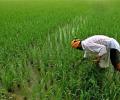
India is already a heavyweight in global farm trade in pockets such as rice exports, but experts are urging a pivot from a subsidy- and procurement-driven mindset to a productivity and nutrition strategy that still shields farmers from volatility.

'You set up your SIPs and you do not touch them. Not during COVID, not during a war scare, not when your neighbour tells you the market is finished. You let the noise pass over you.' 'The beauty of this approach is that it does not require courage or conviction in the moment. It just requires inertia -- keep the SIP running and do not look at your portfolio too often.'

India's decision to ban the export of non-basmati white rice has pushed up global prices, prompting multilateral lending agencies, such as the International Monetary Fund (IMF), to call for a reconsideration of the move. Though nothing has been spelled out yet officially, sources said, the government might consider requests for government-to-government sale of non-basmati white rice, especially to West African nations where India is a major supplier. Also, traders and exporters of specialty regional rice varieties like sona masuri or gobindo bhog feel that they have been short-changed.
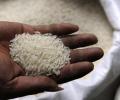
The government on Thursday imposed a 20 per cent export duty on non-Basmati rice except for parboiled rice to boost domestic supplies amid a fall in area under the paddy crop in the current Kharif season. According to a notification by the revenue department, an export duty of 20 per cent has been imposed on 'rice in husk (paddy or rough)' and 'husked (brown) rice'. The Central Board of Indirect Taxes & Customs further said the export of 'semi-milled or wholly-milled rice, whether or not polished or glazed(other than Parboiled rice and Basmati rice)' will also attract a customs duty of 20 per cent.

Admitting to irregularities in the export of non-basmati rice to some African countries during UPA-I tenure, the government on Friday said it has referred the matter to the CVC after slapping show-cause notices on officials of PSUs, involved in the transactions.
As a panel of senior ministers deliberates on the need to review curbs on exports of some rice varieties, data shows that since outbound shipments saw restrictions in July-August last year, the non-basmati segment has suffered more than basmati exports. Sources said the panel is expected to soon deliberate on a few suggestions to ease the export curbs on some rice varieties due to higher-than-required stocks in the central pool. The panel, some observers feel, may also postpone the decision to ease the export curbs till a firm picture emerges on the latest kharif paddy sowing.

India and the European Union are set to announce on January 27 the conclusion of negotiations and finalisation of a free trade agreement, which is aimed at boosting economic ties between the two regions amid disruptions in global trade due to US tariffs, an official said.
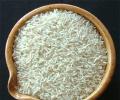
Basmati exports may dip due to the increased competition posed by Pakistan.

Seafood is one of India's largest agricultural exports after basmati rice and buffalo meat.
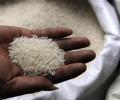
China has started importing Indian rice after a gap of two years and placed orders for the shipment of about 5,000 tonnes of non-basmati rice due to competitive prices offered by India compared to other nations, the All India Rice Exporters Association said.
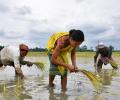
In the coming months, globally as well as in India, rice might remain a hot potato.
The Russia-Ukraine war is likely to improve the export profile of landlocked Chhattisgarh, which has already nearly tripled during the past three years. Chhattisgarh's exports reached Rs 25,241.13 crore in the financial year 2021-22 against Rs 9,067.92 crore worth of products shipped in 2019-20, according to the state government's data. While exports of iron and steel surged seven and a half times, rice shipping increased 4.68 times.

The department of commerce has urged the agriculture ministry as well as the diplomatic mission in Tehran to apprise it of details as to why Iranian buyers have stopped import of rice and tea from India, a senior government official said. Exporters said that exports of items such as high quality tea and rice have stopped since last week. As of now, there has been no confirmation from the authorities and the response from the embassy in Tehran is also taking time, they said.
Very sensitive items -- such as apples, which carry political weight and are closely tied to farmer interests in states like Himachal Pradesh and Uttarakhand -- may face restricted concessions.

State governments have requested the Centre for export incentives, lifting of import duty in the case of cotton for the textile sector and GST exemptions.

With satisfactory progress of monsoon rainfalls prompting farmers to bring in additional area under basmati sowing, prices are set to fall lower going forward.
The old farming practices will have to be changed to save the basmati export business.
Pakistan is planning to take legal action against the Indian government for illegally announcing Super Basmati rice as an Indian product.
Industry associations and companies in the United States, including the US Chamber of Commerce, Coalition of Services Industries and the iconic bike company Harley Davidson have called on the Donald Trump dispensation to push India to reduce tariffs, non-tariffs, and regulatory barriers to boost American exports.

The rail ministry's proposal to reduce transportation tariff for foodgrain by Rs 100 per wagon would not have any cooling effect on food inflation, which was close to 18 per cent for the week ended February 6.

The importance of China as India's top trading partner cannot be understated.

India's gain will be an additional business of $300 million to $400 million per month if 10-11% of Bangladesh's export is diverted to Indian hubs like Tiruppur.

The escalation of conflict in the West Asian region is expected to push already high logistics costs besides hurting trade in sectors such as oil, electronics and agriculture, according to exporters. They said that insurance costs for exports to the countries directly involved in the war could also go up, which will impact Indian exporters' working capital. Think tank Global Trade Research Initiative (GTRI) stated that the conflict is already hurting India's trade with countries like Israel, Jordan, and Lebanon.
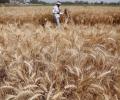
The surge in wheat export from India owing to the Ukraine crisis has once again demonstrated how farmers in states that have flexible marketing frameworks and low taxes benefit more from an emerging situation. The bulk of the wheat exported from India, trade and industry sources say, is being sourced at rates significantly higher than the state-mandated price of Rs 2,015 per quintal in Madhya Pradesh (MP), Uttar Pradesh (UP), and Gujarat - states which have low mandi taxes compared to Punjab and Haryana. This is not only benefiting farmers there but could also lead to significant savings for the states in procurement costs in the months to come.

Livestock auctions remained on hold for the majority of the lockdown as there was no clarity on the matter.

The Russia-Ukraine crisis, along with general bullishness in agricultural commodities, has ensured that after a fairly long time, most of the 24 commodities for which the Centre declares the minimum support price (MSP) are trading above it. The exceptions here are chana or gram and a few varieties of pulses. This might gladden the farmers, especially those who are still holding on to their stocks from the previous kharif harvest or are harvesting the latest rabi crop. But this could stoke retail and wholesale inflation.
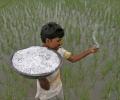
Chhattisgarh, popularly known as the rice bowl of central India, is witnessing politics over the foodgrain with ruling the Bharatiya Janata Party and main opposition the Congress trying to attract voters through it.

'It is a fiercely fought battle, like our fiery chillies in Guntur.'
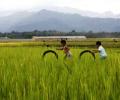
In urban India, the fall in rice consumption was 0.2 kg per person per month.
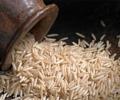
The industry expects Iran to purchase at least 1 million tonnes this financial year

Iran is India's largest importer of tea in value terms while in terms of volume, it is the second largest after Russia
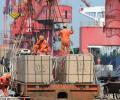
India's exports fell for the fourth straight month in June as shipments of key segments like petroleum and textiles declined but the country's trade turned surplus for the first time in 18 years as imports dropped by a steeper 47.59 per cent.

ITC Ltd on Friday reported a 23.09 per cent increase in consolidated net profit at Rs 5,070.09 crore for the third quarter ended December 2022, helped by growth momentum across its operating segments. The diversified company had posted a net profit of Rs 4,118.80 crore during the October-December quarter of the previous fiscal, ITC said in a regulatory filing. Its revenue from operations was up 3.56 per cent to Rs 19,020.65 crore during the quarter under review, as against Rs 18,365.80 crore in the corresponding period of the previous fiscal.
The growth in world trade is expected to slow down to one per cent in 2023, due to global uncertainties, according to a WTO forecast. The World Trade Organization (WTO) has also projected a growth of 3.5 per cent in global trade this year, as against the April estimate of 3 per cent. World trade is expected to lose momentum in the second half of 2022 and remain subdued in 2023, as multiple shocks weigh on the global economy, the multi-lateral body has said in a statement.

Prime Minister Narendra Modi, who is in the United States for a three-day state visit, has gifted an eco-friendly lab-grown 7.5 carat diamond, placed in Kashmir's exquisite Papier mache box, to First Lady Jill Biden.

Meanwhile, with China switching its trading partners due to geo-political issues, increased trade with South Africa for bauxite and with the US for coal is also auguring well for vessels with tonne miles going up.

'Revision of the base year for both CPI and GDP are long overdue.' 'The basic data that went into the 2011-2012 series were mainly from surveys done in 2011 or earlier.' 'We have since seen the emergence of new sectors like platform-based work and online marketing.' 'The employment surveys and the consumption surveys need to reflect these adequately.'

The group has called for a retaliatory tariff action against India, if New Delhi does not roll back the 'unilateral and discriminatory' equalisation levy or Google Tax.
A meal in an Indian restaurant in London has become costlier due to stronger rupee and restrictions on supplies and exports necessitated by growing demand within India for basmati rice.According to a London-based Rice Association, the strengthening Indian rupee has increased sterling import costs by more than 10 per cent between August 2006 and January 2008.
 © 2026 Rediff.com - Advertise with us - Disclaimer - Privacy Policy - Sitemap - Feedback - About us - Terms of use - Grievances